
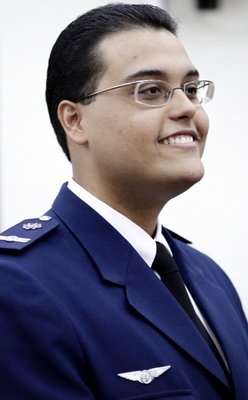
Rodrigo Costa Moura
Research Lines
- • Spectral element methods for CFD
- • Transition and turbulence simulation
Publications (34)
A discontinuous Bubnov-Galerkin spectral element spatial discretisation of the first-order form of the neutron transport equation using a discrete ordinate angular discretisation with multidimensional anisotropic dispersion and dissipation analysis
Mitchell, J. I. , Eaton, M. D. , Moura, R. C. , Jones, C. , Wilson, S. G. , Latimer, C. , Kópházi, J.
Show abstract Hide abstract
© 2026 The Authors. Published by Elsevier Ltd. This is an open access article under the CC BY license. http://creativecommons.org/licenses/by/4.0/In this paper, the discontinuous Bubnov-Galerkin spectral element method (DBG-SEM) has been used to spatially discretise the first order form of the neutron transport (FONT) equation. A discrete ordinate (SN[jls-end-space/]) approximation is also used to discretise the angular variables and the multigroup approximation has been used to discretise the energy variable. The DBG-SEM has been compared against the discontinuous Bubnov-Galerkin finite element method (DBG-FEM) using two benchmark verification test cases. This is the first time that a detailed comparison of DBG-SEM and DBG-FEM has been completed in the context of the FONT equation. The method of manufactured solutions (MMS) has been used to investigate the convergence rate of the proposed discretisation schemes. This demonstrates that both the DBG-SEM and DBG-FEM yield the same rate of convergence with increasing polynomial order. Both the DBG-SEM and DBG-FEM were used to solve the OECD/NEA two-dimensional (2D) C5G7 nuclear reactor physics benchmark verification test case. Again both methods yield a similar level of numerical accuracy using both straight-sided and curvilinear elements. This analysis of the local element matrix condition number demonstrates that the DBG-SEM yields a lower condition number than the DBG-FEM. Finally, multidimensional anisotropic dispersion and dissipation analysis (MA-DDA) was utilised to understand the dispersion and dissipation errors of the DBG-SEM and DBG-FEM. This is the first time that DDA has been utilised for analysing the dispersive and dissipative properties of spatial discretisation methods for the FONT equation in multidimensions. This analysis demonstrated that the DBG-SEM and DBG-FEM have similar dispersion and dissipative behaviour when exact element integration was used, which is an expected result.
Wavy leading-edge phenomena on circular cylinder flow
Ferreira, Paulo H. , Moura, Rodrigo C. , de Araújo, Tiago B.
Show abstract Hide abstract
© 2025 Author(s).The present work explores a bio-inspired modification of a cylinder, incorporating a wavy pattern inspired by humpback whale flipper tubercles. Drawing on prior research on airfoils and wings, the investigation provides valuable insights into the implications of this novel geometry on cylinder flow, contributing to the existing knowledge in the field. A selection of four patterns of waviness (varying in amplitudes and wavelengths) is compared to a smooth (i.e., straight cylinder) model by measuring pressure distribution and aerodynamic forces. The study is conducted in a wind tunnel, considering Reynolds numbers from about 3.9 × 10 4 to 1.9 × 10 5 . Notable findings include a drag coefficient reduction of up to 25% for a model with 12% wavelength and 3% waviness amplitude. Flow visualization reveals the presence of two distinct phenomena: the formation of three-dimensional laminar separation bubbles, and the indications of counter-rotating vortex pairs over the cylinder surface. These flow structures contribute to explain the observed drag variation through changes in the separation line, base pressure, and other associated mechanisms. This study enhances our understanding of the performance of such bio-inspired designs.
A Performance Analysis of Multiple Feature-Based Indicators for Adaptive Mesh Refinement in Continuous Galerkin Simulations
Carvalho, Eduardo de Oliveira , da Silva, André Fernando de Castro , Moura, Rodrigo Costa
Show abstract Hide abstract
© 2025, American Institute of Aeronautics and Astronautics Inc, AIAA. All rights reserved.Adaptive refinement methods can help speed up expensive simulations by reducing the amount of user-dependent processes during mesh generation. One of the most crucial steps in these methods is identifying regions requiring spatial resolution interventions. One of the most straightforward ways of doing this is using featured-based indicators. Because of their general simplistic nature, they may be inefficient in detecting problematic elements under specific numerical circumstances. The current work seeks to analyze these indicators in the context of spectral/hp discretization using continuous Galerkin. We categorized the indicators into three groups: jump, spectral, and error-based. The first two had their performance tested, while the last was employed as a reference. We analyzed them using multiple one-dimensional and one two-dimensional tests to verify how different feature-based indicators perform in distinct numerical circumstances. To measure their performance, we analyze their capability to decrease discretization error when guiding a sequence of p-adaptation cycles. The indicator that performed most consistently well was based on the maximum derivative jump.
Joint-mode diffusion analysis of spectral/hp continuous Galerkin methods: Towards superior dissipation estimates for implicit LES
Moura, R. C. , Fernandes, L. D. , da Silva, A. F.C. , Sherwin, S. J.
Show abstract Hide abstract
© 2024 Elsevier B.V.We present a new linear eigensolution analysis technique that provides superior estimates of dissipation distribution in wavenumber space for the continuous Galerkin (CG) method. The technique builds upon traditional dispersion–diffusion analyses that have been applied to spectral/hp element methods, but in particular is an improvement upon the non-modal eigenanalysis approach proposed by Fernandez et al. (2019). The present technique takes into account the indirect effects that dispersion may have on dissipation, as recently discussed by Moura et al. (2022), in order to better represent dissipation itself. Also, a concept used by the dynamic mode decomposition (DMD) community is invoked to weight the relative contribution of the multiple diffusion curves that stem from temporal eigenanalysis. This allows for obtaining a single dissipation profile in wavenumber space, so that the proposed technique is named joint-mode analysis. Although the non-modal approach also provides a single diffusion curve, the joint-mode dissipation curve is shown to correlate significantly better with the energy spectrum of Burgers’ turbulence at large and intermediate scales, which is particularly relevant for implicit large-eddy simulation (LES). The proposed technique is readily extensible to other spectral/hp element methods.
Joint-mode diffusion analysis of discontinuous Galerkin methods: Towards superior dissipation estimates for nonlinear problems and implicit LES
Moura, R. C. , Fernandes, L. D. , da Silva, A. F.C. , Sherwin, S. J.
Show abstract Hide abstract
© 2024 Elsevier Inc.We present a new linear eigensolution analysis technique that provides superior estimates of dissipation distribution in wavenumber space for the discontinuous Galerkin (DG) method. The technique builds upon traditional dispersion-diffusion analyses that have been applied to spectral/hp element methods, but in particular is an improvement upon the non-modal eigenanalysis approach proposed by Fernandez et al. in [1]. The present technique takes into account the indirect effects that dispersion may have on dissipation, as recently discussed by Moura et al. in [2], in order to better represent dissipation itself. Also, a concept often used with dynamic mode decomposition (DMD) techniques is invoked to weight the relative contribution of the multiple diffusion curves that stem from temporal eigenanalysis. This allows for obtaining a single dissipation profile in wavenumber space, so that the proposed technique is named joint-mode analysis. Although the non-modal approach also provides a single diffusion curve, the joint-mode dissipation curve is shown to correlate significantly better with the energy spectrum of Burgers' turbulence at large and intermediate scales, which is particularly relevant for implicit large-eddy simulation (LES). The proposed technique is readily extensible to other spectral/hp element methods.
IMPLICIT LES VIA SPECTRAL/HP CG METHODS: RATIONALE AND COMPARISON TO OTHER LES/ILES
Garcia-Ribeiro, Daniel , Zanca, Augusto H.P. , Malatesta, Vinícius , Moura, Rodrigo C. , Sherwin, Spencer J.
Show abstract Hide abstract
© 2024, Scipedia S.L., All rights reserved.Spectral element methods (SEM) are receiving increased attention over recent years given their capability to yield LES-type results without turbulence models (implicit LES - iLES). There is, though, a lack of fundamental studies on the suitability of continuous Galerkin (CG) methods, as most studies have focused on discontinuous SEM. This work aims to investigate solution quality and numerical robustness of CG-iLES by discussing simulations of the Taylor- Green Vortex and of spatially-developing turbulent channel flows. The performance of a recently developed stabilization technique (GJP) receives special attention. We show that CG-iLES with GJP can outperform traditional LES and be competitive alongside discontinuous SEM iLES.
Fully-discrete spatial eigenanalysis of discontinuous spectral element methods: Insights into well-resolved and under-resolved vortical flows
Tonicello, Niccolò , Moura, Rodrigo C. , Lodato, Guido , Mengaldo, Gianmarco
Show abstract Hide abstract
© 2023 Elsevier LtdThis study presents a comprehensive spatial eigenanalysis of fully-discrete discontinuous spectral element methods, now generalising previous spatial eigenanalysis that did not include time integration errors. The influence of discrete time integration is discussed in detail for different explicit Runge–Kutta (1st to 4th order accurate) schemes combined with either Discontinuous Galerkin (DG) or Spectral Difference (SD) methods, both here recovered from the Flux Reconstruction (FR) scheme. Selected numerical experiments using the improved SD method by Liang et al. (2009) [53,54] and Jameson (2010) [55] are performed to quantify the influence of time integration errors on actual simulations. These involve test cases of varied complexity, from one-dimensional linear advection equation studies to well-resolved and under-resolved inviscid vortical flows. When simulations are well-resolved, the overall order of accuracy of the (fully-discrete) method of choice is limited to that of the time integration scheme. Moreover, it is shown that, while both well-resolved and under-resolved simulations of linear problems correlate well with the eigenanalysis prediction of time integration errors, the correlation can be much worse for under-resolved nonlinear problems as observed via numerical experiments. In fact, in the numerical simulation of under-resolved vortical flows, the predominance of spatial errors made it practically impossible for time integration errors to be distinctly identified. As a result, the eigenanalysis predictions are expected to hold (even if partially) in direct numerical simulations of turbulence. This highlights that the interaction between space and time discretisation errors is more complex than otherwise anticipated, contributing to the current understanding about when eigenanalysis can effectively predict the behaviour of numerical errors in practical under-resolved nonlinear problems, including under-resolved turbulence computations.
Assessment of RANS-type turbulence models for CFD simulations of horizontal axis wind turbines at moderate Reynolds numbers
Garcia-Ribeiro, Daniel , Malatesta, Vinícius , Moura, Rodrigo C. , Cerón-Muñoz, Hernán D.
Show abstract Hide abstract
© 2023, The Author(s), under exclusive licence to The Brazilian Society of Mechanical Sciences and Engineering.Nowadays, numerical simulations of wind turbines based on the Reynolds-averaged Navier–Stokes (RANS) formulation are becoming, in terms of computational cost, increasingly more viable tools for geometry optimization and design. Nevertheless, a judicious use of RANS-type methods is still required to guarantee acceptable accuracy at manageable computational cost. Here, we assess the accuracy and cost of several well-known turbulence models (Spalart–Allmaras, k- ε , k- ω SST, along with transitional modelling) with and without a zigzag tape modelling for a representative horizontal axis wind turbine within a range of moderate Reynolds numbers (Re ≈ 3 × 10 5 to 8 × 10 5). This range allowed for the assessment of turbulence models under various complex flow conditions. Significant differences in performance have been found and, for a notable portion of the test cases, the k- ε model was able to deliver good results (similar to k- ω SST results) with a considerably coarser mesh. This suggests that k- ε , although often recognized as less accurate than k- ω SST, might actually be more efficient for wind turbine simulations. Also, although the best results came only with a coupled transition model which required a higher computational cost, this increase in cost is not exceedingly high and might allow for this model’s usage in later design stages. Accordingly, the present study is a valuable source for future wind turbine simulations and design and we hope that it fosters further developments in the field.
Wavy Trailing Edge Effects on Truncated Thick Airfoil
Ferreira, Paulo Henrique , Moura, Rodrigo Costa , de Paula, Adson Agrico
Show abstract Hide abstract
© 2023, American Institute of Aeronautics and Astronautics Inc, AIAA. All rights reserved.Thicker blunt trailing edge airfoils are extensively employed in many applications, especially in wind turbines. Their structural properties, such as strength section and area moment of inertia, and aerodynamic characteristics, such as higher curve slope and maximum lift coefficient, are particularly specials to design a blade that operates under varying cyclic loads and speeds, which establish dynamic conditions of creep loading, and fatigue stress. The main disadvantages are the higher drag and an intense and broadband noise, caused by the vortex shedding downstream. Many improvements have been achieved using passive flow controls to mitigate those problems, but there is still wide design space for better solutions. In this sense, the aim of this study is to investigate the potential of waviness applied on truncated trailing edge of thick airfoils as a possible efficient flow control mechanism. For this purpose, experiments in wind tunnel is carried out in order to understand the effects of different wavy geometries on truncated airfoil. A NACA 0020 airfoil is selected as a baseline profile, truncated at 15% from the trailing edge, and three configurations of waviness are tested: A = 0.11c, λ = 0.40c; A = 0.03c, λ = 0.40c; and A = 0.03c, λ = 0.11c. The phenomena is evaluated measuring forces in a wind tunnel at a Reynolds numbers of 200,000, and applying a technique of oil flow visualization. Main results shows that the wavy model presents much higher values of aerodynamic efficiency for lower angles of attack up to α = 5º. Besides that, another wavy configuration overcame the efficiency of the smooth truncated model for almost all pre and pos-stall regions. For low angles, a possible explanation is the break of vortex shedding coherence spanwise in the base, while for higher angles waviness allows to avoid flow separation over the surface.
Discretization Error Guided Optimal Mesh Adaptation in One-dimensional Steady Problems
de Oliveira Carvalho, Eduardo , Moura, Rodrigo Costa , de Castro da Silva, André Fernando
Show abstract Hide abstract
© 2023, American Institute of Aeronautics and Astronautics Inc, AIAA. All rights reserved.When solving differential equations, one must often use spatial discretization. However, this process introduces errors that are mesh dependent. Thus, improving solution quality while saving computational resources requires adequate spatial resolution. One way of doing so is to treat this issue as an optimization problem that targets the reduction of discretization error. The current work presents an approach to mesh optimization using r-adaptation and the adjoint method for one-dimensional steady equations. The two equations selected to display this methodology are the heat equation with a forcing term and the viscous burgers equation. The discretization method is a second-order finite differences scheme. The results present a substantial reduction in discretization error when the optimized meshes are employed.
No publications found
Supervisions (7 master's, 3 phd)
Daniel Garcia Ribeiro (2025) PhD
Eduardo de Oliveira Carvalho (2025) PhD
Gerben Johannes Siegersma (2024) Master's
Augusto Henrique Peruchi Zanca (2024) Master's
Paulo Henrique Ferreira (2023) PhD
Yukari Watanabe Guerreiro Martins (2022) Master's
Lucas Dantas Fernandes (2022) Master's
Mellanie Nabak Rocha (2022) Master's
Kelvin Cristofalo de Morais (2021) Master's
João Luiz Perez Costa (2020) Master's